|
page 3
|
Cost |
Item Description
|
Click Picture
for Larger Image
|
|

|
$16.00 |
FO302c
Here is a very nice specimen of South Dakota Baculite. The piece measures
3" x 1 1/2" x 3/4" and has not been polished. This fossil has highly
detailed suture marks and nice color. A great way to begin your fossil
collection.

Another photo.
This fossil is a member of the Species Baculites compressus which is
from the Cretaceous Period some 60 million years ago. It is from the Upper
Pierre Shale Formation of Meade County in South Dakota.
|
South Dakota Baculite
|
 |
$30.00 |
FO303c
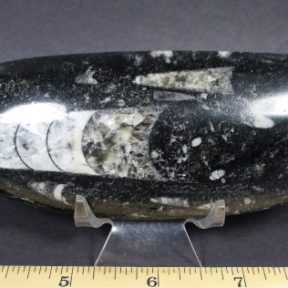
Here is a very nice, complete larger Geisonoceras fossil. It measures 6 1/2"
x 5" x 2" and is polished all over except the end as shown. It has intricate detailed
suture lines and a good color blend of Gray and White. A definite keeper
for the fossil collector.
Another photo.
|
Geisonoceras
|
 |
$250.00 |
FO306b
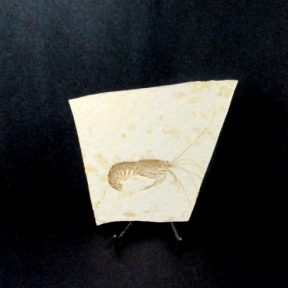
Here is a large, very good quality Fossil Diplomystus and Knightia Fish
from the Eocene Age from the Green River Formation, Lincoln County, Wyoming.
This specimen measures 16 1/4" x 13 1/4" on the outside of the matrix and
is 1/4" thick. The larger Diplomystus fossil fish in middle measures
7" from head to tail. The smaller Knightia fish range from 2 1/2"
to 4". These fossil fish lived some 50 million years ago and are found in
a light colored Limestone.
Another photo.
Another photo.
|
Fossil Fish
|
|

|
$14.00 |
FO304c
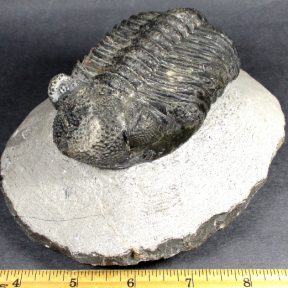
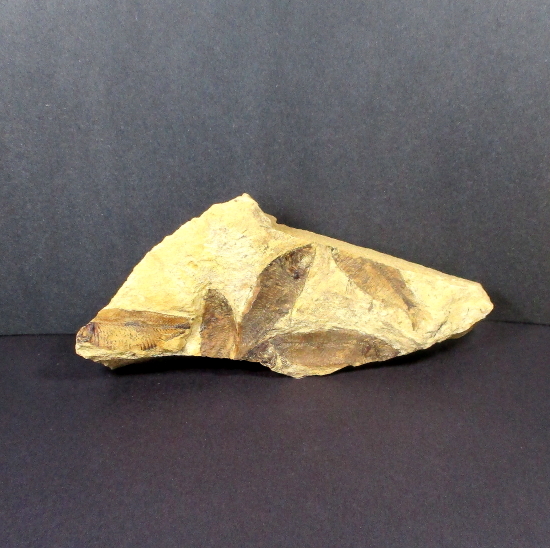
This is a fossilized Trilobite from Morocco. The specimen measures
nearly 2 1/4" x 1 5/8 " x 21 3/8" and has not been polished. The Trilobite measures
2 1/4" x 1 1/2" and is in mostly in the matrix. A very cool fossil for
you to enjoy. Another photo.
|
Trilobite
|
|

|
$30.00 |
FO305b
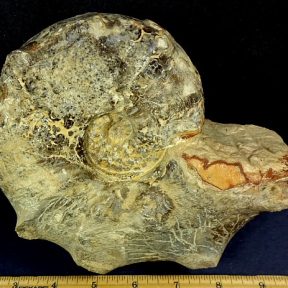
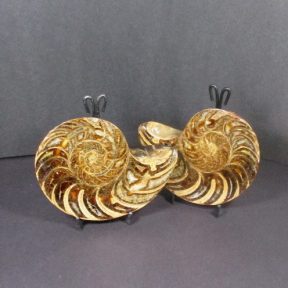
This is a complete fossilized Ammonite from Madagascar. The
exterior has been ground smooth and polished to show the suture lines. The
Ammonite is a pretty brown color with the detailed tan suture lines The specimen measures
3 1/4" x 2 5/8" x 3/4". An excellent item to display in
your collection! Another photo.
Another photo.
Ammonites are extinct members of the cephalopod group of mollusks.
Only a limited number of species have survived to the present day which
includes the squid and the chambered nautilus. Ammonites had a
multi-chambered shell, and added more chambers as it grew, always living
in the outer chamber. They lived in the Cretaceous period some 63
to 130 million years ago.
|
Ammonite
|
|
|
$28.00 |
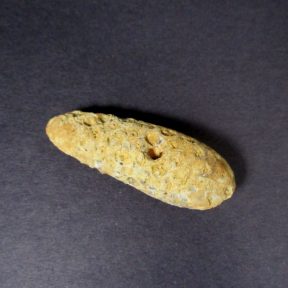
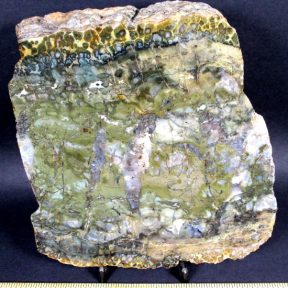
FO313c
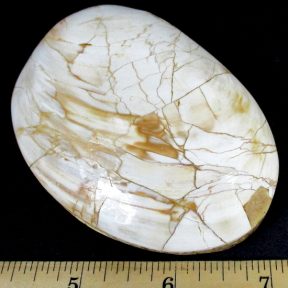
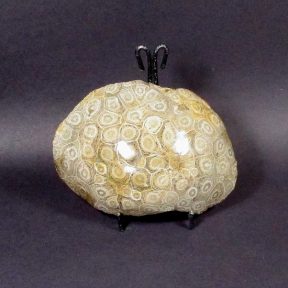
Here is something different for the Fossil collector. This is a nice
piece of fossilized Coprolite, also known as "Dino Dung". It measures
6" x 4" x 1 1/2" and has been polished on the front side. This specimen
has a nice blend of color and a good design that resembles Petrified Wood.
Take it home with you today. |
Coprolite
|
|

|
$18.00 |
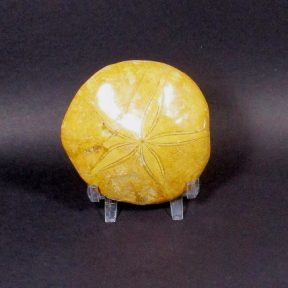
FO300c This
is a neat find!! Here is a Nice Quality fossilized Sand Dollar from
Madagascar. It measures 2 1/4" x 2 1/4" x 3/4" and has been nicely polished
on the top surface to bring out the detail allowing for a great display.
Another photo.
This species of sand dollar is "Clypeasteroida" They are very beautiful
specimens and have nice detail. They are from Majanga, Madagascar and
lived in the Jurassic period some 146 to 200 million years ago.
|
Fossil Sand Dollar
|
|

|
$40.00 |
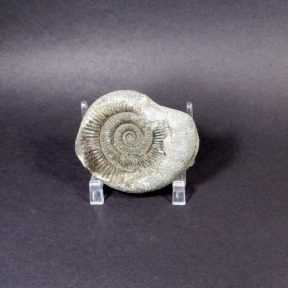
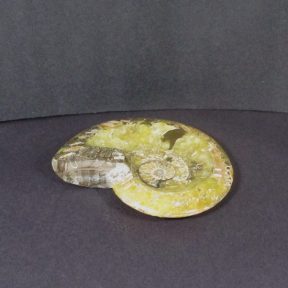
FO310c This
is a fossilized Ammonite from the early Jurassic (Lias) period nearly
200 million years ago. This is species Dactylioceras Commune from near
Whitby in North Yorkshire, England. The specimen measures 3 1/4"
across at the widest part in matrix measures 3 7/8" x 3 1/2 " x
1 1/4" in depth. |
Ammonite
|
|

|
$170.00 |
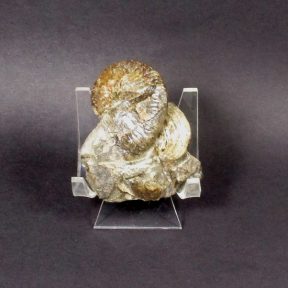
FO308b This
is a fossilized Ammonite collage from the Jurassic (Mesozoic era)
period about 172 million years ago. This is species Dactylioceras
in country rock from Schlaifhausen, Germany. The specimen has many Ammonites in various
sizes scattered throughout measuring from1/2" to 1 1/2" and the matrix measures 5
1/2" x 4" x 1 1/8". Very cool!
Another photo. |
Ammonites
|
|

|
$7.50 |
FO312b Here is a fossilized Echinoid from Morocco.
The picture at the right is representative of the
Echinoid you will receive. These specimens vary in size from 1 3/4"
to nearly 2 1/4" in diameter and 7/8" to 1 1/8" thick.
Another photo.
You will receive one (1) Echinoid. Unfortunately, we are unable to
give a choice to specimens but we do promise a good selection.
|
Echinoid
|
 |
$16.00 |
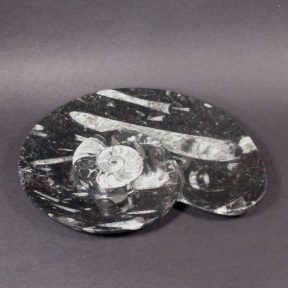
FO311c
Here is a smaller Geisonoceras fossil. It measures 3 3/8" x
3" x 1 1/2" and is polished on all sides except the bottom end. It
has intricate detailed suture lines and a good color blend of Black, Gray
and White. Close observation will reveal several external fractures
which are quite common for this type of fossil.. This Geisonoceras
fossil is from Morroco.
|
Geisonoceras
|
 |
$100.00 |
FO301b
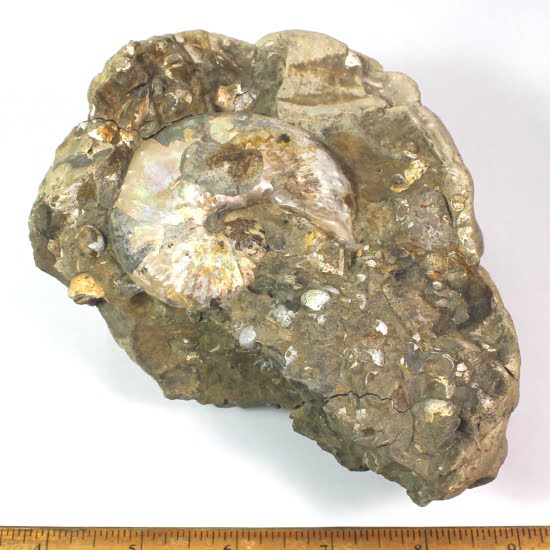
This is a very nice, high quality Schafite in matrix. This fossil
is from South Dakota. It measures 2 1/4" x 2" in a fossilized matrix
measuring 8 1/2" x 5" x 4". The Schafite has a natural, iridescent,
pearl-like finish. These fossils make great gifts or work wonderful
as an educational tool for school, scouts or clubs. Close observation
will reveal several other partial to semi-complete fossils throughout the
matrix. Another photo.
Another photo.
Ammonites are extinct members of the cephalopod group of mollusks. Only
a limited number of species have survived to the present day which includes
the squid and the chambered nautilus. Ammonites had a multi-chambered shell,
and added more chambers as it grew, always living in the outer chamber.
They lived in the Cretaceous period some 63 to 130 million years ago.
|
Schafite
|
 |
$50.00 |
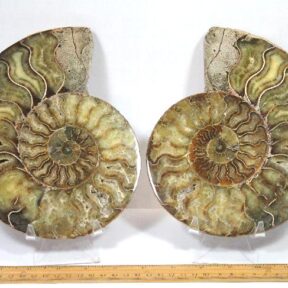
FO309b
Here is a very nicely polished one half of a beautiful Ammonite from Madagascar.
This Ammonite has been polished to show the inner beauty. The section
measures nearly 5 3/8" x 4 1/2" x 1/2" and has a nice polish on the inner
sides. The Ammonite has a deep Brown crystallized center of Calcite and Aragonite.
Ammonites are extinct members of the cephalopod group of mollusks. Only
a limited number of species have survived to the present day which includes
the squid and the chambered nautilus. Ammonites had a multi-chambered shell,
and added more chambers as it grew, always living in the outer chamber.
They lived in the Cretaceous period some 63 to 130 million years ago.
|
Ammonite
|