|
page 7
|
Cost |
Item Description
|
Click Picture
for Larger Image
|
|

|
$18.00 |
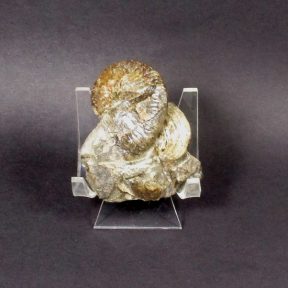
FO702c
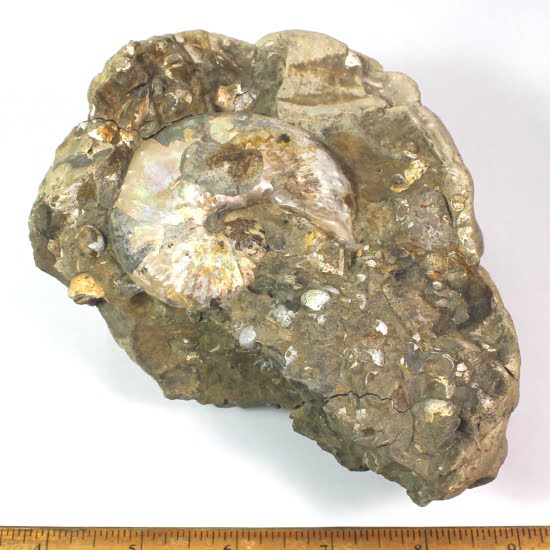
This is a set of three Black Ammonites from Peru. These black
ammonites are species Lyelliceras lyelli. They are from Huaruco,
Peru, and lived in the Cretaceous Period (middle Albian), approx. 105
million years ago. They measure smallest to largest specimen - 1 3/8", 1
3/4" and 1 7/8".
Ammonites are extinct members of the cephalopod group of mollusks. Only
a limited number of species have survived to the present day which includes
the squid and the chambered nautilus. Ammonites had a multi-chambered shell,
and added more chambers as it grew, always living in the outer chamber.
They lived in the Cretaceous period some 63 to 130 million years ago.
|
Peruvian Ammonites
|
 |
$25.00 |
FO701b
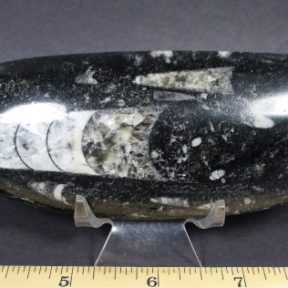
Here is a very nice, complete Geisonoceras fossil. It measures 4
1/2" x 3" x 1" and is polished all over. It has intricate detailed suture
lines and a good color blend of Gray and White. A definite keeper for
the fossil collector. |
Geisonoceras
|
|

|
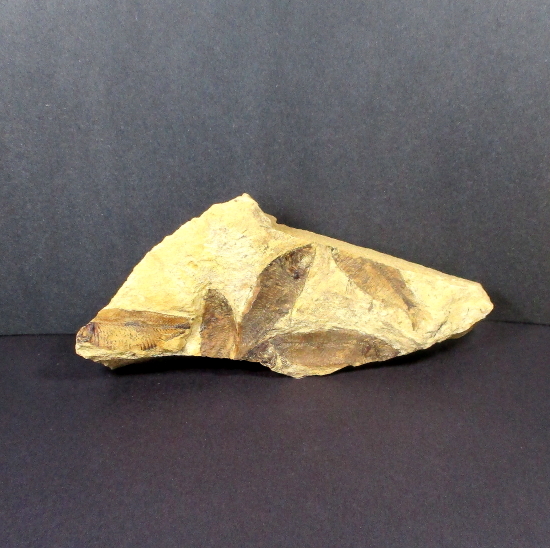
$27.00 |
FO703b
This is an unique Fossil Fish Knightia specimen. It originates from
the Eocene age from the Green River Formation, Lincoln County, Wyoming. This
specimen has a very nice detailed fish that measures 4 1/4" from head to tail
with a partial secondary fish touching the first fish. The Limestone
matrix measures 7" x 6" x 1/2". This fossil fish lived some 50 million
years ago. They are found in a light colored Limestone. |
Knightia Fish
|
 |
$40.00 |
FO708c
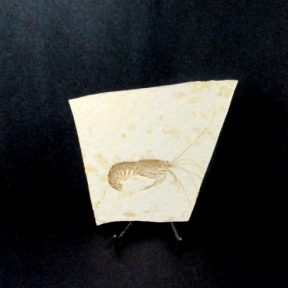
This is fossilized Lobster from Gunn Point, Darwin, Northern Territory, Australia.
It was formed after the area was catastrophically buried by an intense cyclone,
with Mangrove trees in Calcium rich mud. This particular specimen, although
not complete is well preserved and measures 3 3/4" x 1 1/2" x 1". It
would make a great addition to any fossil collection.
Another photo.
|
Lobster
|
 |
$12.00 |
FO709b
Here are set of three Sand Shark Teeth. The teeth measure
approximately 1 1/2" to 2 1/8". Each tooth has good
detail and natural appearance. These teeth would make a great gift for
the fossil collector or a super educational tool for any teacher, scout leader
or science center. Similar to like item. You will receive a
set of three (3) teeth of our choosing. |
Sand Shark Teeth
|
|

|
$16.00 |
FO710c
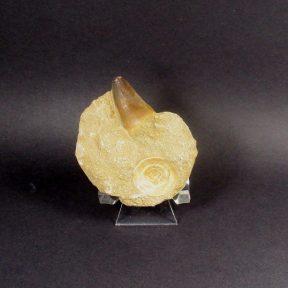
This is a nice Shark Tooth Fossil in matrix. It is from Morocco.
The specie name is Otodus Obliquus and it is from the Eocene period.
This one measures 1 5/8" diagonally and is in matrix 4" x 3 5/8" x 2
1/8".
|
Sand Shark Tooth
|
 |
$30.00 |
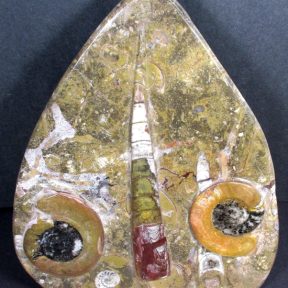
FO700b
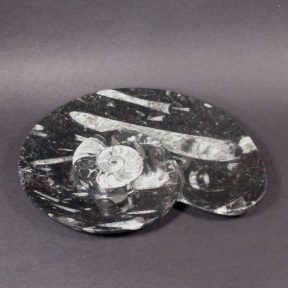
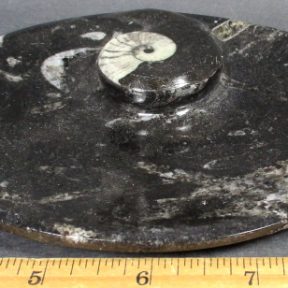
This is a new and different item at the Rock Shed, a Orthoceras Fossil Plate from Morocco. This
plate measures nearly 12" in diameter and has a nice polish.
The plate is hand carved so it is slightly irregular in shape. The plate
is a soft Brown color and has a nice Orthoceras fossil in one area with
other fossils scattered throughout. A nice item for any collection.
Orthoceras was a marine cephalopod, this particular species was straight
shelled and they thrived some 400+ million years ago in the Paleozoic era.
|

Fossil Plate
|
 |
$25.00 |
FO707b
Here is something different for the fossil collector. This is a very
nice set of 3 Orthoceras Fossil Free Forms with several nice polished specimens.
The specimens measure approximately 6 1/4" to 7" in length and 1 1/2" to
1 3/4"
in width. The fossils have a smooth, polished finish and have not been
chipped out of the matrix like the Orthoceras plaques we sell. These
fossils are from Morocco. They make great decorator pieces as well as
collectible for the fossil collection.
Note: The
fossils we send will be similar to the picture since the ones we have in
stock are all very near the same size and each looks very similar to the
picture (all have good detail and are nice). You will receive three (3)
fossils.
Orthoceras was a marine cephalopod, this particular species was straight
shelled and they thrived some 400+ million years ago in the Paleozoic era.
|

Orthoceras
|
 |
$15.00 |
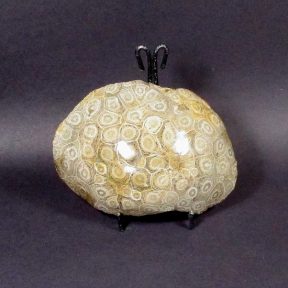
FO704b
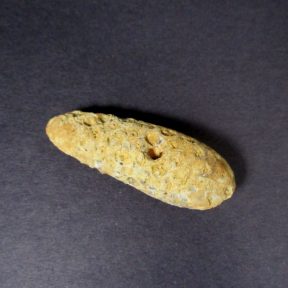
Here is something different for the fossil collector. This is a very
nice, above average quality Devonian Colonial Coral specimen. The fossil
measures 2" x 2 1/2" x 7/8" . The Coral has nice
detail and a good appearance. A very nice addition to your fossil collection. Another photo. |

Coral
|
|

|
$25.00 |
FO711c
Here is a fossil Sand Shark tooth in matrix from Morocco. The species name
is Otodus Obliquus and it is from the Eocene period. The tooth measures 2"
diagonally and rests in a matrix that measures 3" x 3 3/4" x 1 1/2".
|
Shark Tooth
|
|

|
$28.00
|
FO706b This is a
very nice Fossil Fish Knightia from the Eocene Age from the Green River
Formation, Lincoln County, Wyoming. This fossil fish specimen is in
limestone matrix
measuring nearly 5 1/2" x 4"x
3/4". The fossil itself measures 4" from head to tail.
This fossil fish lived some 50 million years ago. These fish are found in
a light colored Limestone.
In southwest
Wyoming (and parts of Colorado and Utah) in the Green River Formation are
found some of the world's most outstanding specimens of fossil fish.
The Green River system was composed of three lakes: Lake Ulinta, Lake
Gosiute and Fossil Lake. These Eocene Lakes lay in a series of
intermountain basins formed by geological events that uplifted the Rocky
Mountains during the early Tertiery time.
The Climate was much different from the
desert-like climate of this area today. Both the fauna (crocodiles,
alligators, boa constrictors and some subtropical fish families) and the
flora (such as large palm trees) indicate a climate much like that found
along the Gulf Coast today. Large amounts of ash found in the sediments
indicate that volcanoes were particularly active at this time.
The fossils found in the
Green River Formation are between 40-60 Million years old and are in
excellent preservation. The most common fish found in the formation is
the Knightia, a herring-like fish. They are found singularly or in large
groupings. These groupings are referred to as "Mortality Layers" and are
believed to have been caused by extensive ash fall-out after volcanic
eruptions. Some of the other species of fish found in the Green River
Formation are: Phareodus, a carnivorous fish often found up to 2 feet in
length and having many sharp teeth. Mioplosus, a true perch, and
Priscacara, a sunfish-like fish with stout dorsal and anal spines. There
are also turtles, stingrays, crocodiles and alligator gar-fish.
The fossils of the Green River Formation
- each one unique - are some of natures finest art. They are highly valued
by collectors the world over. |
Knightia Fish
|